The Grocery Store Is Lying to You: A Doctor's 60-Second Label Decoder

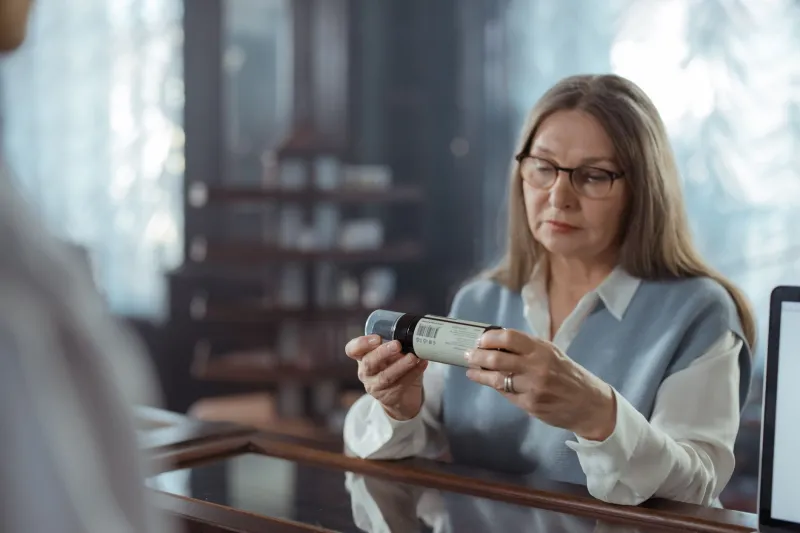
Photo: person reading nutrition facts label on food package in grocery store aisle, via images.stockcake.com
Every time you walk into a grocery store, you're outnumbered. The packaging, the placement, the buzzwords splashed across the front of the box—none of it is there to inform you. It's there to sell to you. And honestly? The marketing teams are very good at their jobs.
But here's the good news: the actual truth about what's in your food is legally required to be printed on the back. You just have to know how to read it. Let me walk you through how I do it in the aisle, in under a minute.
Start at the Back, Never the Front
The front of the package is an advertisement. Full stop. "All-natural," "made with real vegetables," "a good source of fiber"—these phrases have almost no legal definition and even less nutritional meaning.
The back panel is where the facts live, and there are only two things I look at first: the ingredient list and the serving size.
The Serving Size Shell Game
Here's the trick that fools people constantly: every number on the nutrition facts panel—the calories, the sodium, the sugar—refers to a single serving, not the package.
That innocent-looking bottle of iced tea in the refrigerated case? Some of those contain 2.5 servings. The bag of trail mix you'll finish during the game? Often three or four. Do the multiplication before you judge a food, because nobody eats a third of a muffin.
Quick math rule: if you'll realistically eat the whole thing, multiply everything by the servings per container. That's the number that matters.
Ingredient Lists: Order Is Everything
Ingredients are listed by weight, from most to least. So the first two or three ingredients tell you what the food actually is, regardless of what the front of the box claims.
A bread labeled "multigrain" can absolutely have enriched wheat flour—basically white flour with vitamins sprayed back in—as its first ingredient. "Multi" just means several grains are present somewhere. "Whole" is the word you want: whole wheat or whole grain should appear near the top of the list, ideally first.
And sugar? It hides under at least 60 different names. Honey, agave, brown rice syrup, cane juice, barley malt, anything ending in "-ose." If three or four of these show up in the top five ingredients, you're eating dessert that thinks it's dinner.
Sodium: The Quiet Offender
As a physician, sodium is the one I worry about most, because it's invisible. It doesn't make food taste sweet, and it's sky-high in foods that don't taste salty at all—bread, pasta sauce, deli turkey, canned soups, even cottage cheese.
Use this benchmark: anything with more than 20% of the Daily Value (that's about 460mg) per serving is a high-sodium food. A single cup of many canned soups runs 40% or more. Your blood pressure doesn't care that the label says "sea salt."
"Natural Flavors" and Other Vague Suspects
People ask me about "natural flavors" all the time. The honest answer: it's a legal catch-all term that can cover a wide range of substances derived from natural sources. It's not automatically harmful, but it's also not informative. A short ingredient list you can actually pronounce is generally a better sign than any front-of-box promise.
Your 60-Second Cheat Sheet
Screenshot this for your next shopping trip:
- Ignore the front of the package entirely.
- Check servings per container and multiply accordingly.
- Read the first three ingredients—that's what the food really is.
- Whole grain, not multi-grain. The word "whole" must appear.
- Sugar by any other name: count the sweeteners, not just "sugar."
- Sodium check: over 20% Daily Value per serving = high.
- Shorter ingredient list > longer buzzword list.
Why This Actually Matters for Your Health
I tell my patients this isn't about perfection—it's about tipping the odds. Most chronic conditions I see in clinic—hypertension, type 2 diabetes, high cholesterol—have diet as a major lever. You don't need a nutrition degree or a meal delivery subscription. You need sixty seconds and a healthy skepticism of anyone selling you something in a brightly colored box.
The store is designed to fool you. Now you know how to see through it.