Your Gut Is Talking to Your Brain More Than You Think—Here's What Science Actually Says
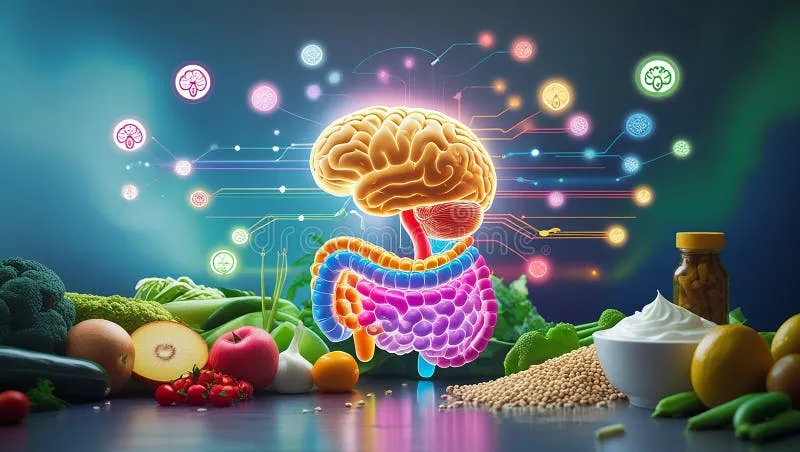
Photo: healthy gut food brain connection colorful vegetables fermented foods, via thumbs.dreamstime.com
Scroll through any wellness feed these days and you'll find someone selling the idea that fixing your gut will fix your anxiety, your depression, your brain fog, and probably your relationship with your mother. It's a lot. And it's made a lot of people—understandably—roll their eyes at the whole concept.
Here's the thing, though: underneath the hype, there's a genuinely compelling area of science developing around the relationship between your digestive system and your mental health. It's not magic. It's not a cure-all. But it's also not nothing. Let's actually dig into what the research says.
What Is the Gut-Brain Axis, Exactly?
Your gut and your brain are in constant, two-way communication through a network researchers call the gut-brain axis. This connection runs through the vagus nerve (a major highway of the nervous system), the immune system, and a complex web of hormones and neurotransmitters.
Here's a number that tends to surprise people: roughly 90 to 95 percent of the body's serotonin is produced in the gut. Serotonin is a neurotransmitter deeply associated with mood regulation, and the fact that so much of it originates in your digestive tract—not your brain—is a meaningful data point. Your gut also produces dopamine precursors and contains more nerve cells than your spinal cord. It's sometimes called the "second brain" for a reason, though that label can oversimplify things.
Living inside your gut is a vast community of microorganisms—bacteria, fungi, viruses—collectively called the gut microbiome. These microbes aren't just passive residents. They actively produce compounds that influence your nervous system, regulate inflammation, and communicate directly with your brain.
What Does the Research Actually Show?
Let's be honest about the state of the science here, because this is where a lot of wellness content goes wrong.
Animal studies have been striking. Researchers have transferred gut bacteria from anxious mice into calm ones and observed anxiety-like behavior emerge in the recipients. Germ-free mice—raised without any gut bacteria—show dramatically altered stress responses and brain chemistry. These findings are genuinely fascinating.
Human research is more complicated, partly because human gut microbiomes are extraordinarily variable, and partly because it's very hard to run controlled experiments on people's diets and mental health simultaneously. That said, several patterns have emerged:
- Population studies consistently find associations between gut microbiome diversity and lower rates of depression and anxiety. People with more diverse microbiomes tend to report better mental health outcomes.
- Dietary intervention studies have shown that people who shift toward a Mediterranean-style diet—rich in vegetables, legumes, whole grains, fish, and olive oil—report meaningful improvements in depressive symptoms, independent of other lifestyle factors.
- Probiotic research (the use of specific live bacteria, sometimes called psychobiotics when studied for mental health) has shown modest but real effects in some randomized controlled trials, particularly for reducing symptoms of mild to moderate anxiety and depression.
Key word: modest. We're not talking about effects that replace medication or therapy. We're talking about adjunctive benefits—things that may support your mental health as part of a broader picture.
Let's Talk About What Doesn't Hold Up
For every solid finding, there are ten overclaims. Here are a few worth flagging:
Drinking kombucha will cure your depression. No. Kombucha contains live cultures, but the strains aren't standardized, the amounts are inconsistent, and there's no clinical evidence it reliably improves mood.
Leaky gut is the root cause of all mental illness. The concept of intestinal permeability is real and being actively studied, but "leaky gut" as a catch-all diagnosis for everything from ADHD to schizophrenia is far beyond what the evidence supports.
One specific probiotic supplement will fix your anxiety. The microbiome is incredibly individual. A strain that shows benefits in a clinical trial may behave differently in your particular gut environment. This is an area where personalized medicine still has a long way to go.
What You Can Actually Do
Here's where we get practical, because that's ultimately why any of this matters.
Eat more fiber. Full stop. A diverse, fiber-rich diet is the single most evidence-backed intervention for supporting a healthy microbiome. Think vegetables, fruits, legumes, whole grains, and nuts. The Mediterranean diet pattern keeps coming up in the research for a reason.
Consider fermented foods. Yogurt with live cultures, kefir, sauerkraut, kimchi—these introduce beneficial bacteria and have shown some benefit in small studies. They're also just nutritious, so there's low downside.
Limit ultra-processed foods. Diets heavy in processed foods are consistently associated with lower microbiome diversity and worse mental health outcomes. This isn't revolutionary advice, but the gut-brain research adds another compelling reason to care about it.
Manage stress. This one goes both directions. Chronic stress disrupts the gut microbiome, and a disrupted microbiome may amplify stress responses. Practices like regular exercise, adequate sleep, and mindfulness don't just help your brain—they appear to support your gut too.
Be thoughtful about antibiotics. Necessary antibiotics are necessary—don't avoid them when you need them. But each course does alter your microbiome, sometimes significantly. Taking probiotics during and after a course of antibiotics may help restore balance faster, though talk to your doctor about timing and strains.
When to Seek Professional Help
This is important. The gut-brain connection is genuinely interesting, but it is not a reason to manage serious mental health conditions through dietary changes alone.
If you're experiencing persistent depression, anxiety that interferes with daily functioning, thoughts of self-harm, or any other significant mental health symptoms, please talk to a healthcare provider. Therapy, medication, and professional support are the primary tools for those situations. A diverse microbiome is a nice supporting player—it's not the headliner.
Similarly, if you have gut symptoms—chronic bloating, irregular bowel habits, significant abdominal pain—those deserve their own evaluation. Don't assume they're "just stress" or that a probiotic will sort them out without a proper workup.
The Bottom Line
The gut-brain axis is one of the more genuinely exciting frontiers in medicine right now. The science is real, it's developing fast, and it's already pointing toward actionable guidance that most of us could benefit from. Eat more plants, diversify your diet, manage your stress, sleep well.
Just don't let anyone sell you a $60 supplement as a substitute for actual mental health care. The gut and brain are talking—but that conversation is more nuanced than any single product can capture.